
Dubai’s abaya market has moved past plain boxes. Buyers now judge a brand within seconds of opening the package, so the box has become part of the product itself. Here are the trends worth watching if you’re building or refreshing your abaya packaging this year.
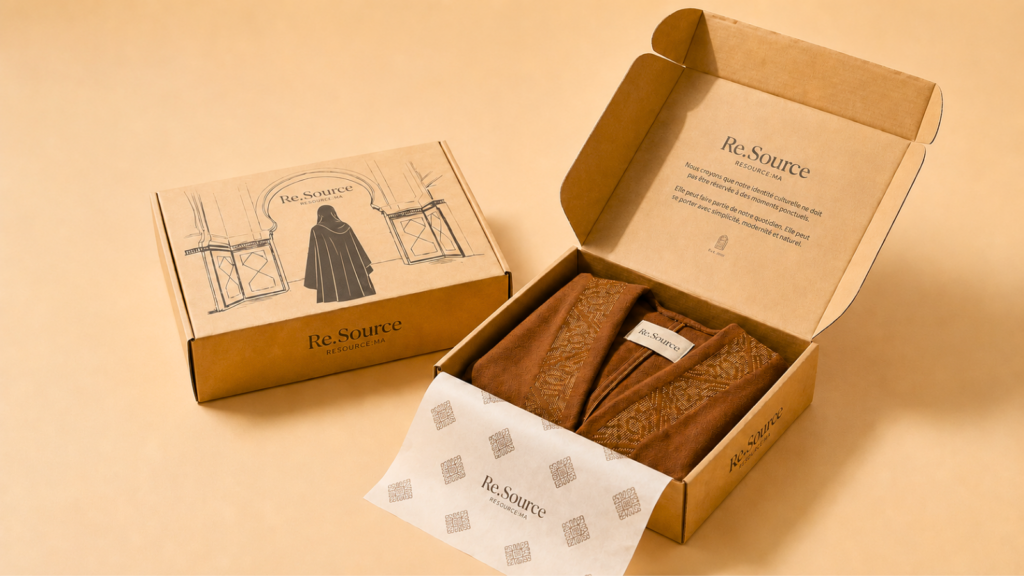
Table of Contents
ToggleSeven Trends Shaping Luxury Abaya Boxes
1. Rigid Boxes Over Flimsy Cartons
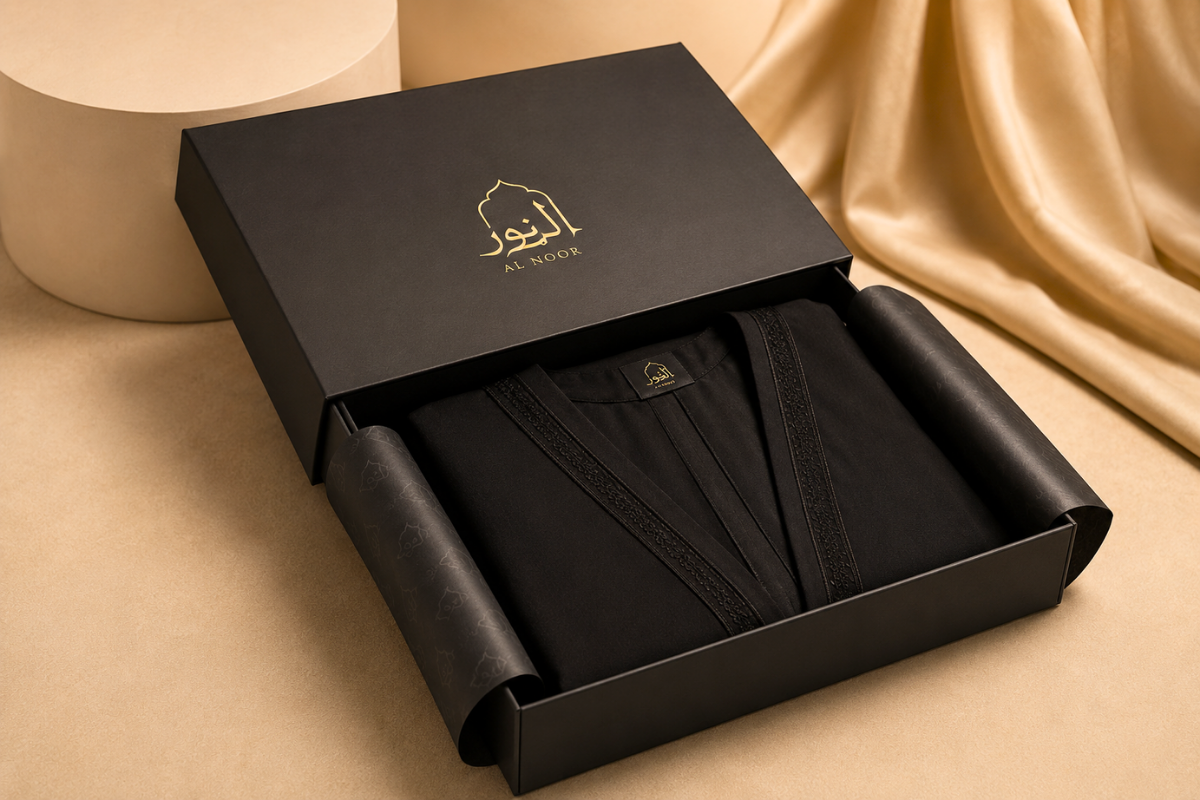
Soft, foldable cartons are losing ground to rigid board construction. A rigid box holds its shape through delivery, keeps the fabric from creasing, and gives a heavier, more expensive feel the moment it’s picked up. For a garment as delicate as an abaya, that structural strength matters as much as the print on top of it.
2. Foiling in Muted, Not Loud, Tones
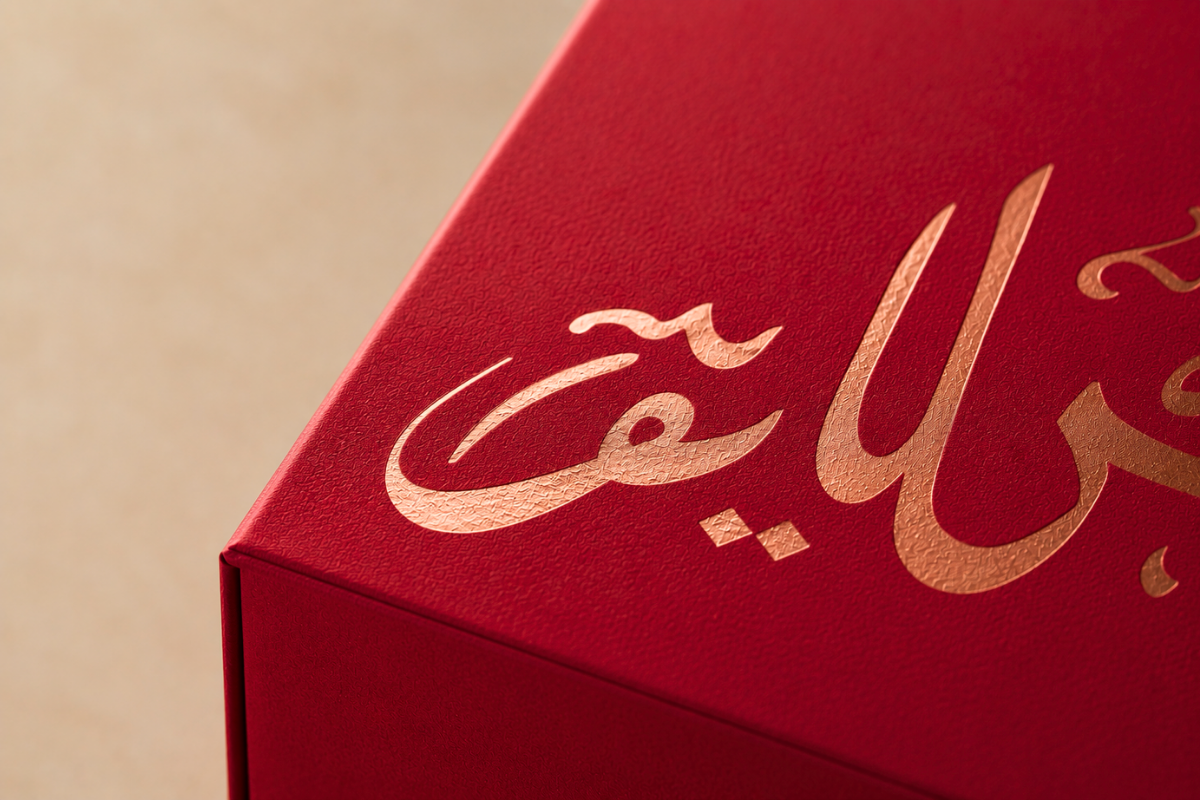
Gold foiling is still everywhere, but the shade has shifted. Instead of bright, reflective gold, brands are leaning toward matte gold, rose gold, or even foiled tone-on-tone lettering that only catches light at certain angles. It reads as understated rather than flashy, which suits how most abaya buyers want to be seen.
3. Minimal Typography, Maximum Whitespace
Packaging design is stripping back. A single wordmark, a logo, or one line of Arabic calligraphy on a plain board now says more than a fully printed box ever could. This restraint puts pressure on paper quality and print precision, since there’s nowhere for a rough edge or a dull finish to hide.
4. Magnetic Closures and Ribbon Pulls
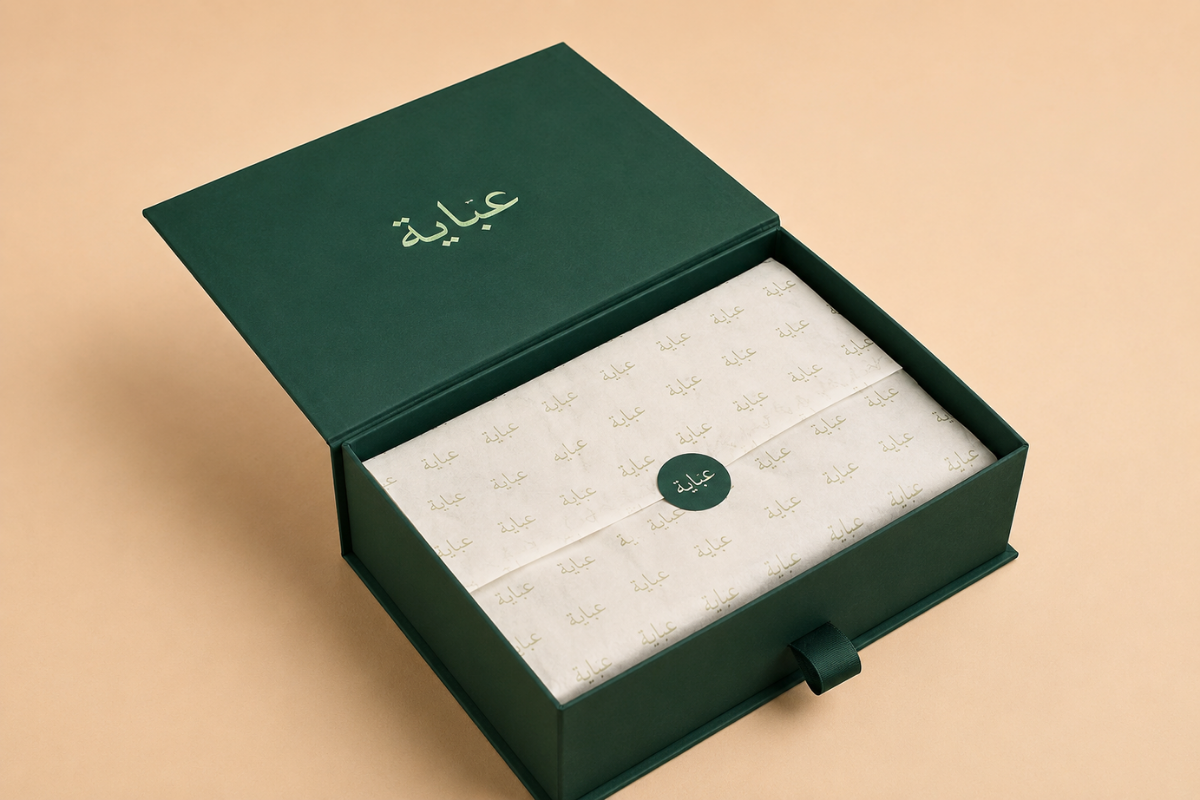
Flap-and-tuck lids are being replaced by magnetic closures, sometimes paired with a ribbon pull tab that lifts the garment out without touching the fabric directly. It’s a small mechanical detail, but it changes how the box feels to open, slower, more deliberate, closer to unwrapping a gift than opening a delivery.
5. Sustainable Boards Without Losing the Premium Feel
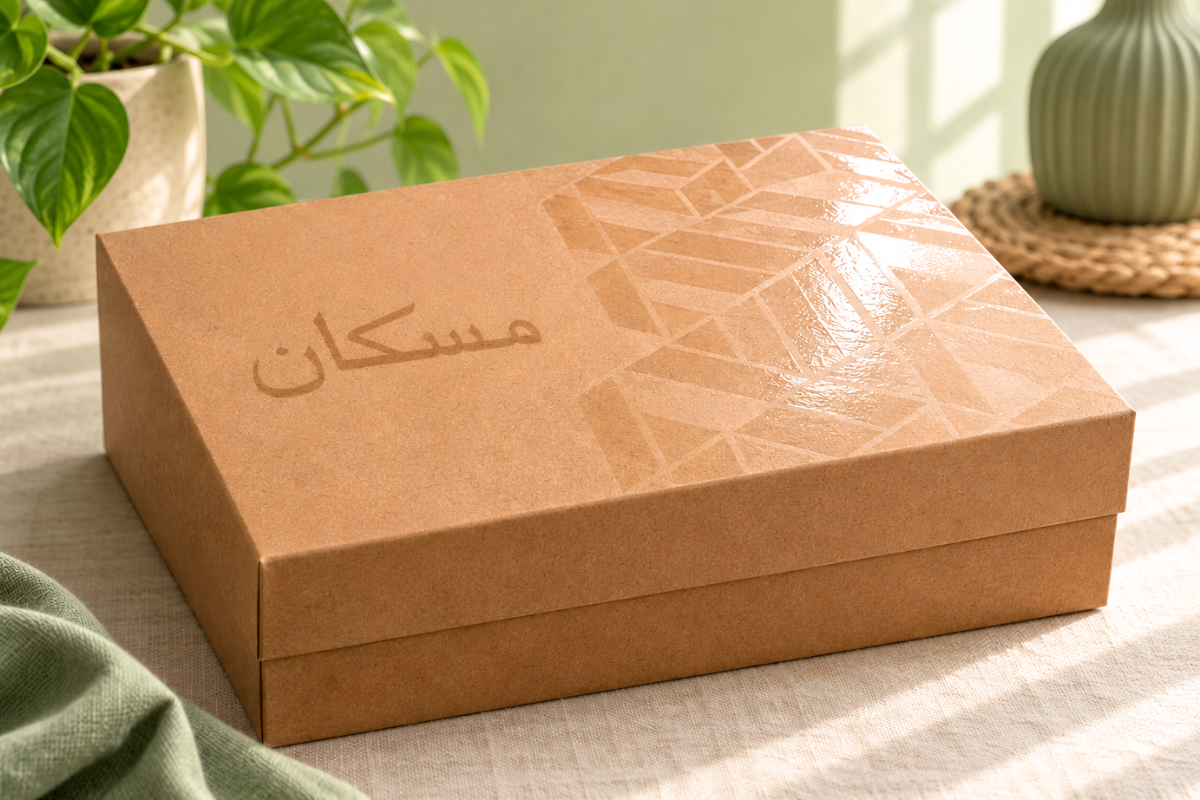
Kraft and recycled boards used to signal a budget product. That’s changing. Brands are now pairing kraft stock with foiling or spot UV to keep the premium look while shifting to a more sustainable base material. It’s proving that eco-conscious packaging and luxury positioning aren’t opposites.
6. Occasion-Specific Packaging
Eid, weddings, and gifting season are pushing brands to run limited packaging variants rather than one box year-round. A festive foil pattern or a seasonal color swap on the same box structure lets a brand mark the occasion without redesigning the whole line from scratch.
7. Inserts That Protect the Garment, Not Just Fill the Box
Tissue wraps and fabric-safe inserts are being built into the box design itself rather than added as an afterthought. This keeps the abaya from shifting in transit and adds another layer the customer has to move through before reaching the garment, which extends that unboxing moment a little further.
What This Means for Your Brand
None of these trends work in isolation. A rigid box with the wrong foil color, or a magnetic closure on a flimsy board, undercuts the whole effect. The strongest abaya packaging right now treats material, finish, and structure as one decision, not three separate ones.
Frequently Asked Questions
What material works best for luxury abaya boxes?
Rigid board gives the strongest shape and premium feel, kraft board works well when you want a sustainable option without losing that look.
Is gold foiling still relevant for abaya packaging?
Yes, though matte and rose gold tones are replacing brighter finishes for a more understated result.
Do I need different packaging for Eid or wedding season?
It’s not required, but a seasonal foil pattern or color variant on your existing box structure is a common way to mark the occasion.