
Standard offset print jobs, flyers, brochures, business cards, postcards, typically take 5 to 7 business days from approved files to finished product. Larger or more complex jobs run longer, prepress and plate making generally add 1-2 days upfront, and drying time alone can add 12-24 hours before any finishing can even start. Here’s what actually happens at each stage, and where a timeline typically stretches beyond that standard estimate.
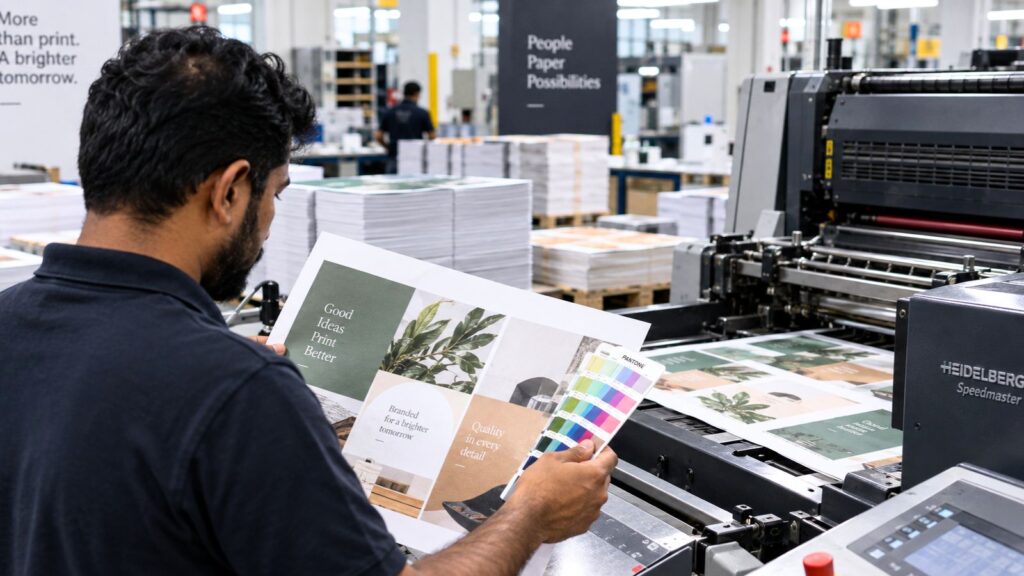
Table of Contents
ToggleThe Timeline at a Glance
| Stage | Typical Duration |
|---|---|
| Prepress and file review | 1 business day |
| Plate making | 1-2 business days |
| Proofing and approval | Varies, depends entirely on response time |
| Press run | Hours for small runs, days to weeks for large runs |
| Ink drying | 12-24 hours, longer on coated stock |
| Finishing (cutting, folding, coating) | 1-3 business days depending on complexity |
| Standard job, total | 7-10 business days |
Since offset is a genuinely sequential process, plates can’t be made before proofs are approved, and finishing can’t start before ink dries, here’s how each stage actually plays into that total.
1. Prepress and File Review
Before anything physical happens, your file goes through prepress review, checking resolution, color mode, and layout against print requirements. This typically takes about a day for a standard file, longer if the file needs corrections before it’s ready to move forward.
2. Plate Making
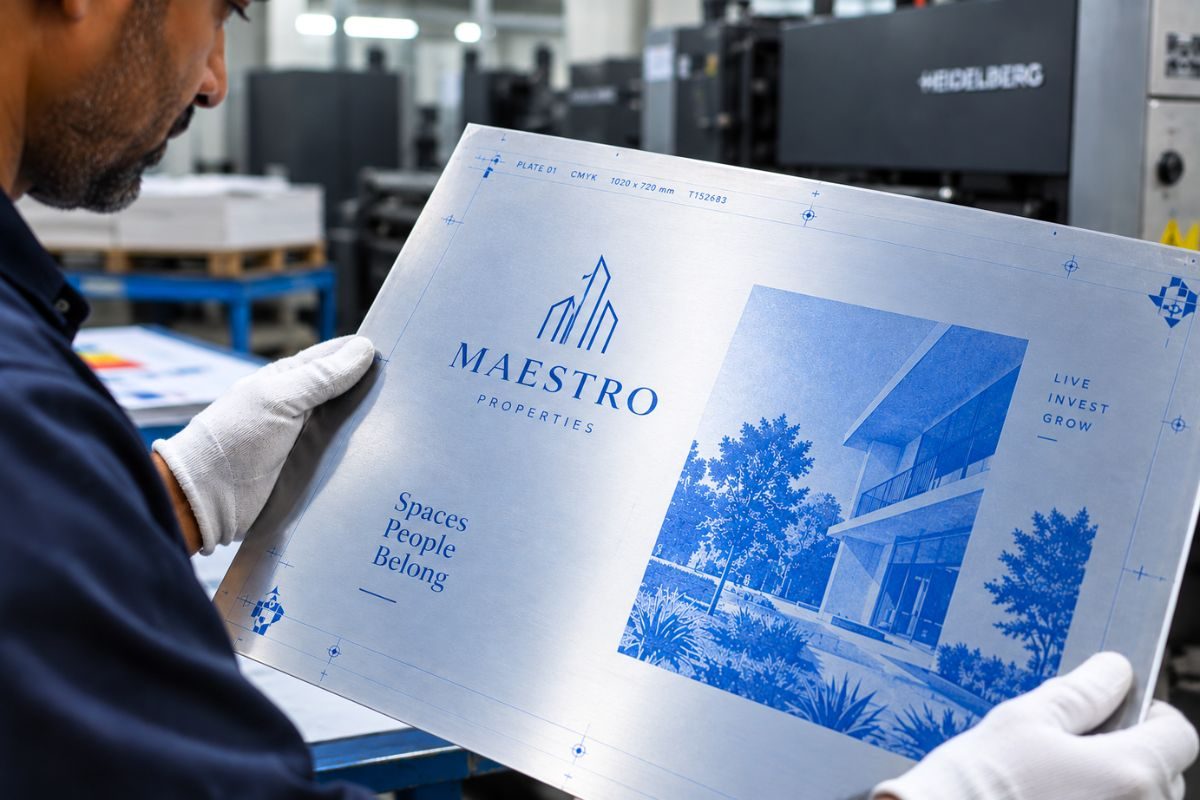
Offset printing needs a physical plate to transfer ink to paper, and this plate has to be created for your specific job before printing starts. Plate making typically takes one to two days, and unlike digital printing, this step doesn’t exist for a digital job at all, which is the core reason offset carries a longer minimum timeline regardless of quantity.
3. Proofing and Approval
Once plates are ready, a proof gets sent for your review before the full run begins. This stage varies more than any other, because the clock pauses entirely until you approve it. A same-day approval keeps the timeline on track, a proof sitting unanswered for two or three days adds that time directly to your total, regardless of how efficient every other stage is.
4. The Press Run
This is where quantity matters most. A short run of a few hundred pieces can move through the press in hours once plates are set, while a run in the thousands or tens of thousands takes proportionally longer, simply because more sheets have to physically pass through the press. If you’re weighing offset against digital for a smaller order, our offset vs. digital comparison shows where each method actually makes sense based on quantity.
5. Ink Drying
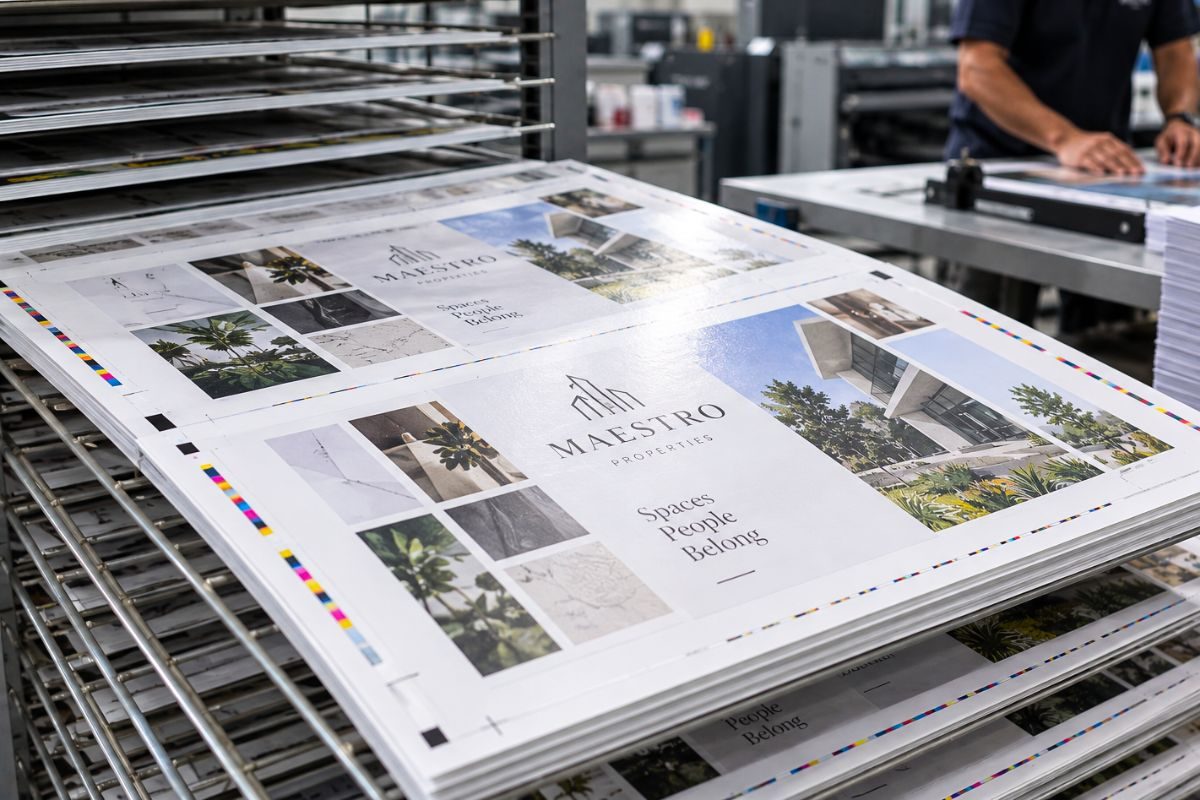
Offset inks generally need 12 to 24 hours to dry properly before any finishing work can happen, and that window extends further on coated or thicker stock, which absorbs ink more slowly than uncoated paper. This is a fixed physical step, not something that can be meaningfully rushed without risking smudging or set-off during finishing.
6. Finishing
Cutting, folding, binding, foiling, embossing/debossing, or adding a coating like lamination all happen after drying, and each one adds its own time on top of the base print job. A simple cut-to-size job adds relatively little, while multiple finishing steps stacked together, coating plus die-cutting plus folding, extend the timeline more than people usually expect going in.
What Actually Extends This Timeline
A few things reliably push a job past the standard 7-10 day estimate: large print quantities, which simply need more press time, multiple or complex finishing steps stacked on one job, and slow proof approval, which is often the single biggest variable in the entire process since it’s the one stage that depends on you rather than the press. For a real example of how this plays out for one specific product, our business card turnaround guide breaks down how quantity and finish affect timing for that particular item.
What This Means for Your Brand
Offset rewards planning ahead more than it rewards rushing. Building in a buffer for proof approval, and confirming your finishing requirements before the file is locked rather than after plates are made, keeps a job on its standard timeline instead of drifting into the two to three week range that complex or large-volume jobs can hit. If your timeline is genuinely tight, it’s worth asking upfront whether digital printing is a better fit for this specific job rather than assuming offset is the default.
Need a realistic timeline for your offset print job? Explore Veesham’s offset printing services and we’ll map out an accurate schedule based on your quantity and finish.
Frequently Asked Questions
Can offset printing be rushed for an urgent deadline?
Sometimes, though rush service often carries an additional fee and doesn’t eliminate the fixed drying time, which is a physical constraint rather than a scheduling one.
Why does offset take longer than digital printing?
Offset requires physical plates made specifically for each job, a step digital printing skips entirely, which is why offset carries a longer minimum timeline regardless of quantity.
Does a larger print run always take proportionally longer?
Not entirely, once plates are made, large runs print efficiently, but very large quantities, tens of thousands of pieces, do add meaningful press time on top of the base timeline.