
The right paper bag for a restaurant or café comes down to three things working together, a food-grade coating matched to what you’re actually serving, a bag structurally strong enough for hot or heavy orders, and branding placed where it survives handling rather than fading or smearing. Getting any one of these wrong shows up fast, a bag that leaks, tears, or looks worn by the time it reaches the customer. Here’s what actually matters for food-service ordering specifically, beyond general paper bag advice.
Table of Contents
Toggle1. Food-Safety Basics You Shouldn't Skip
a. Food-Grade Certification and Compliance
Before anything else, confirm your bags meet food contact regulations, this covers what inks and coatings are safe for direct contact with consumables. A reliable supplier should be able to provide documentation on request rather than just claiming a bag is food-safe. This matters more than it might seem for a café ordering pastries versus a restaurant packaging sauce-heavy meals, the risk profile is genuinely different.
b. Matching Grease Resistance to Your Menu
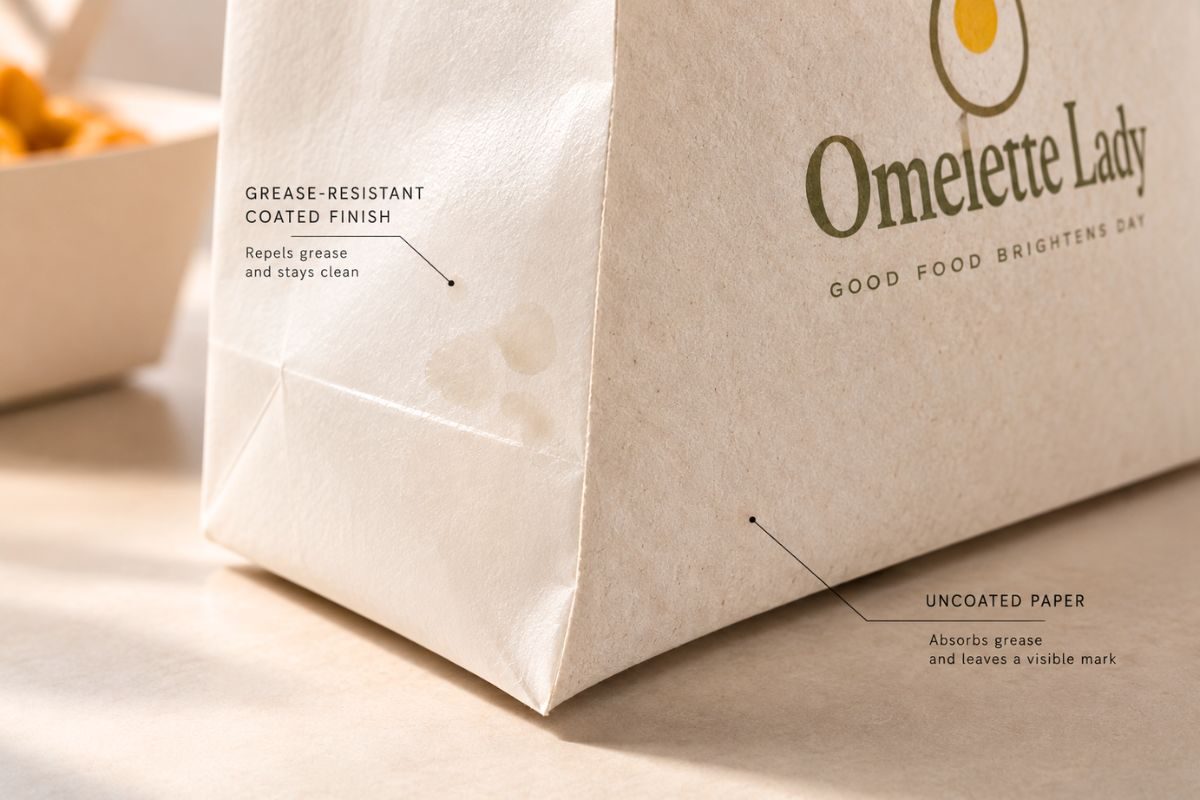
Plain kraft works fine for dry items, pastries, bread, packaged snacks, but oily or sauce-heavy food needs an actual barrier coating. PE coating is the most common and cost-effective option for oily products, wax coating gives strong grease resistance but limits recyclability, and newer water-based or PLA coatings offer similar protection with better compostability. The coating needs to match your actual menu, a bag that performs fine with a dry pastry can still fail with a hot, oil-rich sandwich held for twenty minutes.
2. Durability for Hot and Heavy Orders
a. Weight and Handle Strength
Kraft’s fiber structure gives it decent tensile strength on its own, but that strength doesn’t automatically hold up once heat, steam, or leaking sauce enters the picture. A bag rated fine for a dry, lightweight order can weaken meaningfully once it’s carrying a hot, multi-item meal for a 20-30 minute delivery window. If you’re doing regular delivery, it’s worth testing your heaviest, most moisture-intensive order in your chosen bag before committing to a full print run.
b. Moisture and Steam, Not Just Grease
Grease resistance and moisture resistance aren’t the same thing, and a bag built for one doesn’t automatically handle the other. Steam from a hot dish, condensation building up inside a sealed bag, or a leaking sauce container can all weaken an uncoated or lightly coated bag even if it never touches visible grease. For hot food specifically, ask your supplier which barrier property their coating actually addresses rather than assuming “grease-resistant” covers moisture too.
3. Branding That Still Works After Handling
a. Print Placement That Survives Grease and Steam
A logo placed low on the bag, near where hands grip or where grease is most likely to pool, tends to look worn faster than one placed higher on a cleaner panel. This is a small design decision that matters more for food-service bags than retail ones, since a boutique bag rarely faces the same grease and moisture exposure a café or restaurant bag does. If you’re weighing kraft against a coated or laminated option for print quality, our kraft vs laminated comparison covers how each handles color and finish.
b. Sizing for Your Actual Menu Items
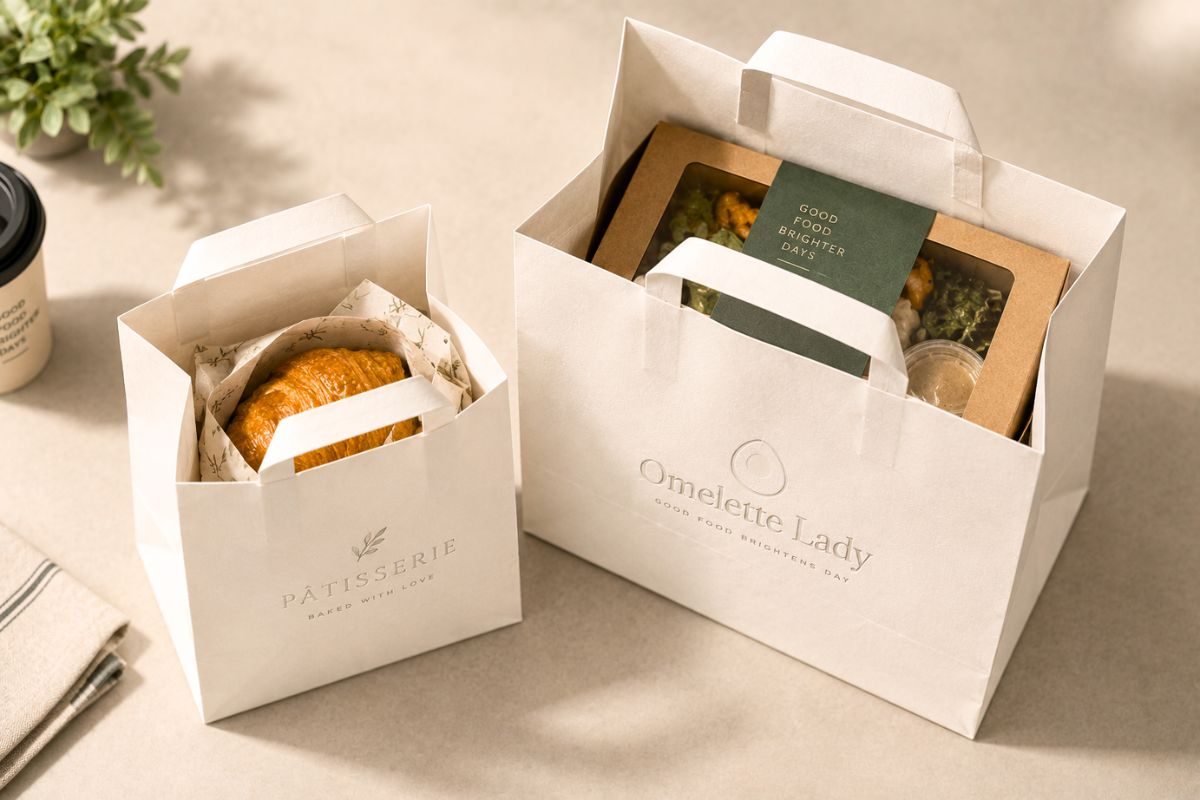
A single bakery item needs a different size than a full meal with multiple boxes, and a bag that’s too large lets food shift and settle unevenly, which can crush lighter items like pastries. Size around your most commonly ordered combination, not your smallest single item, and keep a secondary size on hand for larger multi-item orders rather than forcing everything into one bag size.
What This Means for Your Brand
A food-service bag has a narrower job than a retail one, it has to survive real physical conditions, heat, grease, moisture, handling, while still looking presentable when it’s handed over. Get the coating matched to your menu first, then build branding and sizing decisions around that foundation rather than the other way around. If you’re weighing paper bag handle types or materials more broadly, our eco-friendly paper bags guide covers those options in more depth, and our paper bags for boutiques guide is worth a look if you’re running a hybrid café-retail concept.
Need food-safe paper bags built for your actual menu? Explore Veesham’s paper bag printing and we’ll help match the coating and size to what you’re serving.
Frequently Asked Questions
Do all restaurant paper bags need a grease-resistant coating?
No, dry items like pastries or packaged snacks can work fine with plain kraft. Oily or sauce-heavy food needs a coating matched to that specific risk.
What's the difference between wax coating and PE coating for food bags?
Wax coating gives strong grease resistance but limits recyclability, PE coating is more cost-effective and heat-sealable but also complicates recycling, both trade some sustainability for barrier performance.
Can food-safe paper bags still be fully branded?
Yes, though print placement matters more here than on a retail bag, keeping a logo away from the areas most likely to face grease or moisture exposure helps it stay looking sharp.