
Die-cutting cuts all the way through the sticker and its backing paper, giving you a fully separated sticker with a clean edge on every side. Kiss-cutting cuts only through the top sticker layer, leaving the backing sheet intact underneath so the sticker stays attached until it’s peeled. Picking the wrong one affects how your stickers actually work once they’re off the press, here’s how to know which one your project needs.
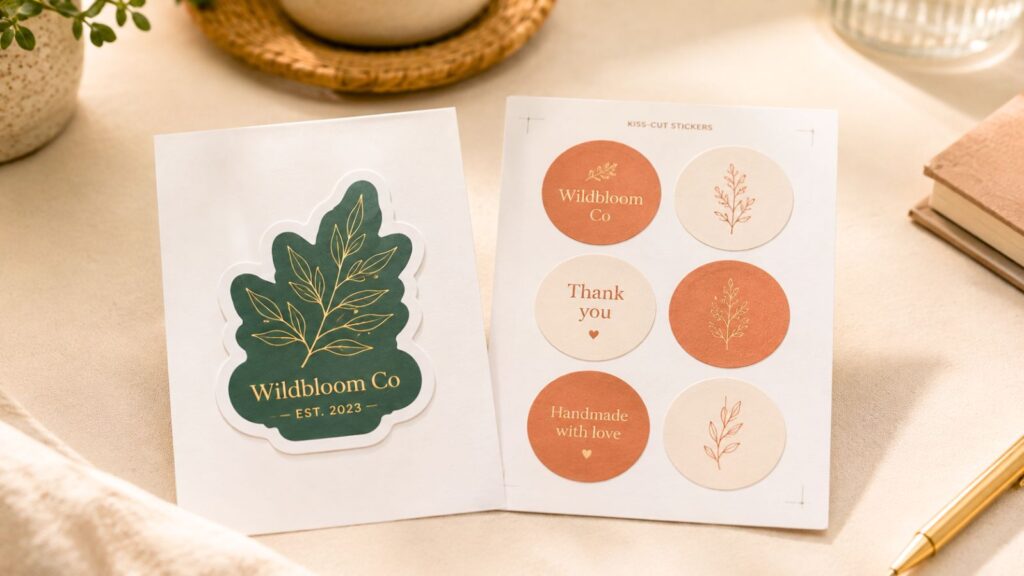
Table of Contents
ToggleHow Each Cut Is Actually Made
The Die-Cutting Process
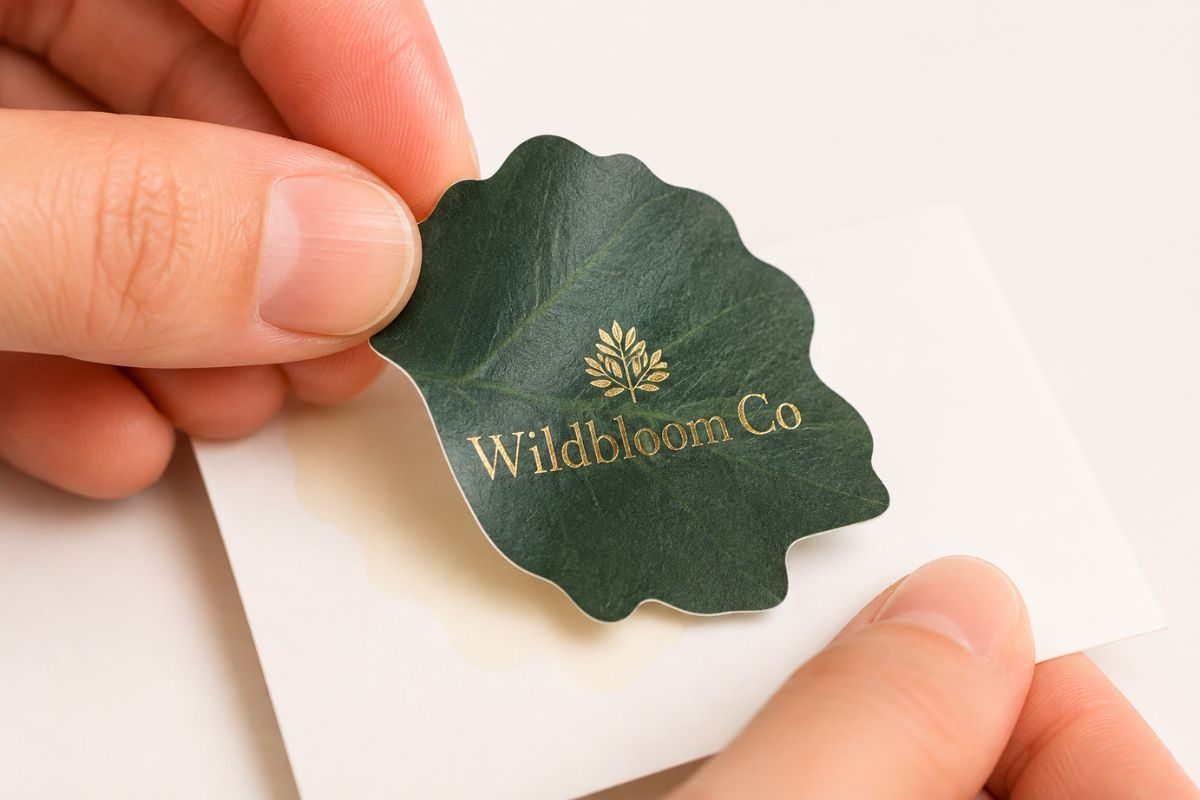
A custom-shaped blade, built specifically for your design, presses through every layer of the material in one motion. Because the cut goes all the way through, the shape has to be finalized before the die is made, changing the outline afterward means cutting a new die entirely, which is part of why die-cutting suits a finished, settled design rather than one still being tweaked.
The Kiss-Cutting Process
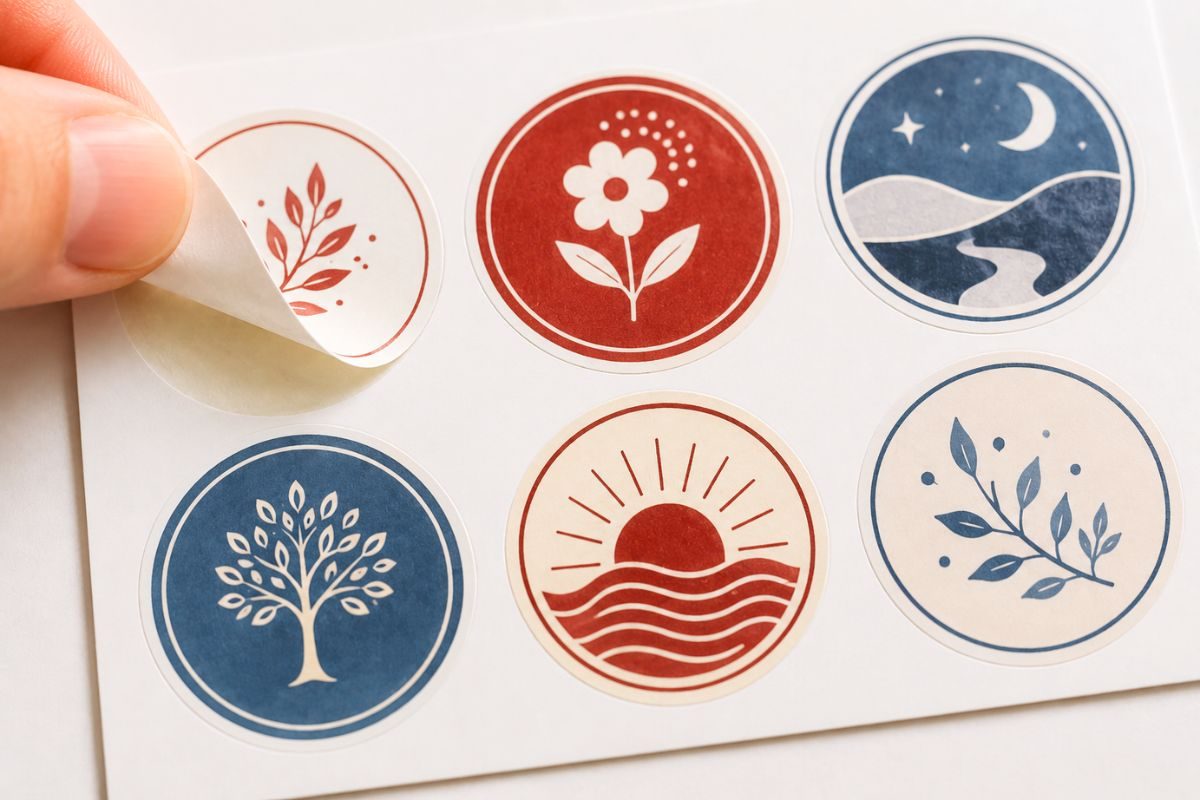
Kiss-cutting uses a blade set to a precise depth, just enough to slice through the top sticker layer without scoring into the backing underneath. That depth control is the whole trick, cut too deep and it behaves like a die-cut, too shallow and the sticker won’t peel cleanly. It’s why kiss-cutting depends more on consistent material thickness across a run than die-cutting does.
Comparing the Two Cuts
Edge and Finish Quality
A die-cut sticker looks complete the moment it’s produced, since there’s no surrounding material at all. A kiss-cut sticker still relies on its backing sheet for structure until someone peels it, which is exactly why kiss-cut stickers work best sold or handed out as a sheet rather than as loose individual pieces.
Material Compatibility
Because die-cutting goes fully through, it handles a wider range of materials consistently, vinyl, paper, holographic film, without much adjustment. Kiss-cutting needs tighter tolerance control since the blade has to stop partway through, which makes it more sensitive to any variation in material thickness across a production run.
Cost and Turnaround
A custom die has to be made before a die-cut job runs, which adds cost and time upfront, especially for irregular or one-off shapes. Kiss-cutting skips that step for multi-design sheets, several designs can share one sheet and get cut together, which is usually the faster and cheaper route when you’re not committed to one single custom outline.
Matching the Cut to Your Actual Project
If you’re producing one design meant to stand alone, a product label, a laptop sticker, a branded seal on packaging, die-cutting is the right call, particularly if the outline is irregular or has fine detail worth preserving exactly. If you’re producing a sheet of multiple designs meant to be peeled off individually, a variety pack, planner stickers, a sample sheet for a new product line, kiss-cutting is both more practical and more cost-effective, and tends to suit smaller designs better since more of them fit efficiently onto one sheet.
What This Means for Your Brand
Neither cut is objectively better, they solve different problems. A single branded sticker meant to represent your logo on its own belongs on a die-cut run, while a themed sticker pack or a sample sheet belongs on a kiss-cut one. Getting this decision right before you order avoids a sticker that either feels flimsy sitting alone or wastes material being cut individually when it didn’t need to be.
Need business cards on a specific deadline? Get in touch with Veesham with your timeline and we’ll tell you exactly what’s realistic.
Frequently Asked Questions
Which cut is cheaper for a large sticker order?
Kiss-cutting is usually cheaper for sheet-based orders since multiple designs can share one sheet without individual dies, die-cutting costs more per unit for custom single shapes.
Can I combine die-cutting with a glossy or matte finish?
Yes, UV coating or lamination can be added before or after die-cutting depending on the material and design, we’ll confirm the right order during production planning.
Is die-cutting necessary for a simple circular or square sticker?
Not always, a basic shape can often be kiss-cut on a sheet just as easily, die-cutting matters most for irregular or fully custom outlines.
Can foiling be added to a kiss-cut sticker sheet?
Yes, foiling can be applied before the kiss-cut step for a premium look on individual designs within a sheet.