
Embossing presses a design up and out of the card surface, creating a raised area you can feel with your fingertip. Debossing does the opposite, pressing the design down into the card so it sits recessed below the surface. Both use the same basic die-pressing technique, just in opposite directions, and which one suits your card depends more on your logo, your paper, and your ink choices than personal preference alone.
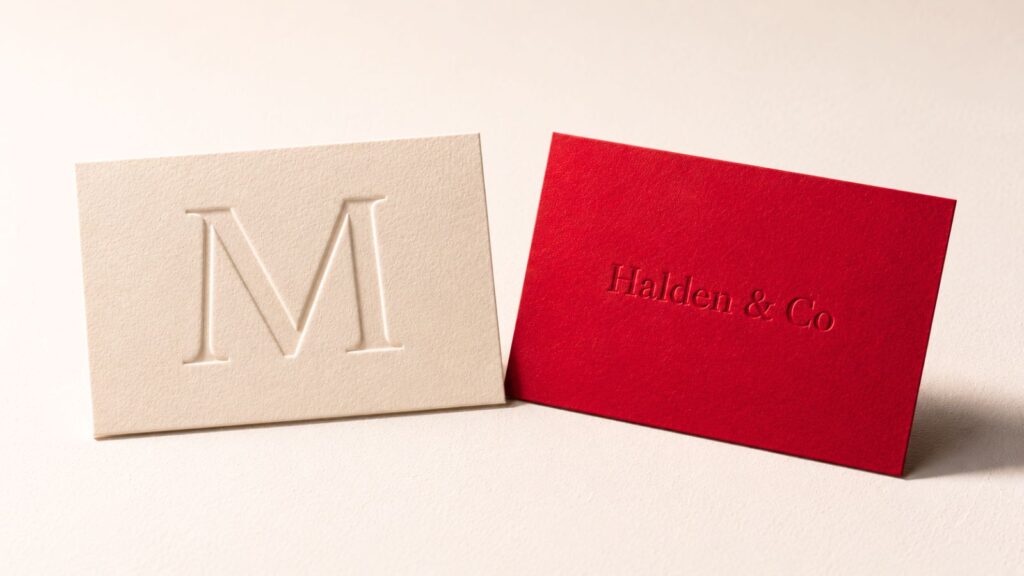
Table of Contents
ToggleHow Each Technique Is Actually Made
The Embossing Process
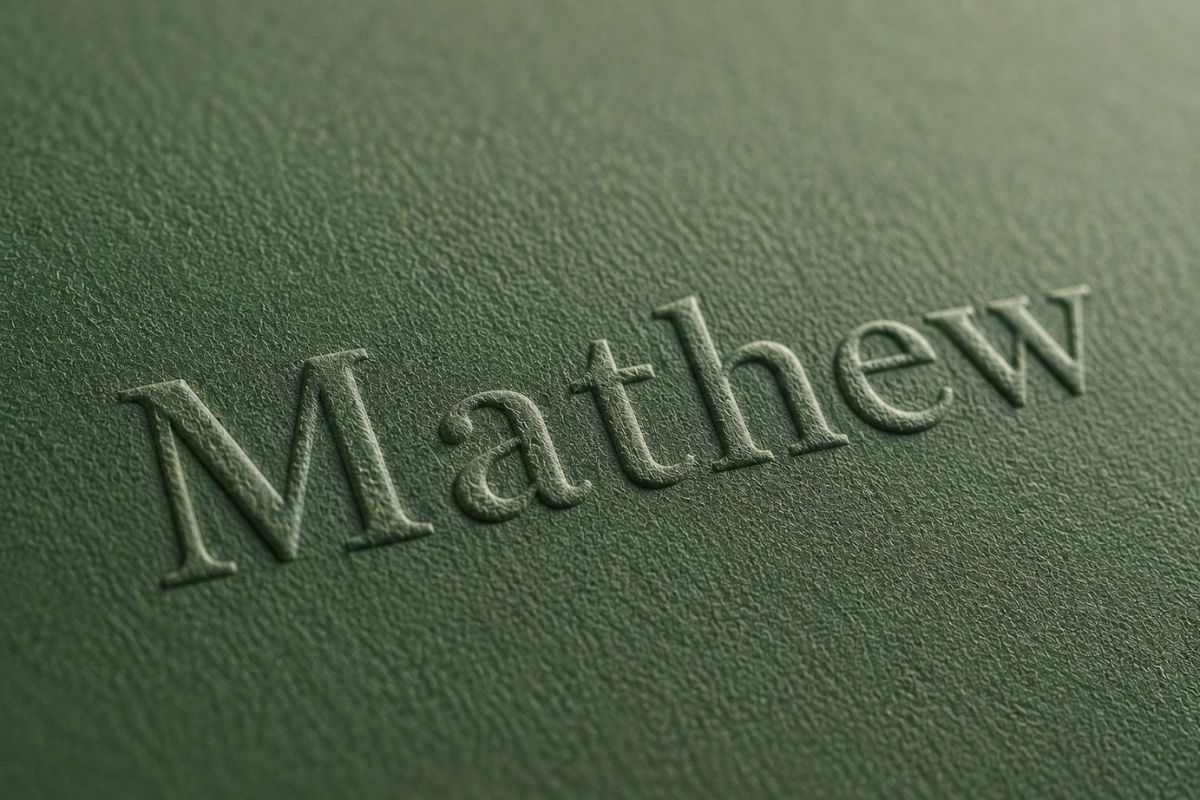
A metal die shaped like your design is pressed up from underneath the card while a matching counter-die presses down from above, forcing the card stock to raise into the design’s shape. The thicker and more pliable the paper, the more pronounced the raised effect can be, which is why embossing tends to favor heavier, uncoated stock over thin, coated paper.
The Debossing Process
Debossing uses the same die-pressing setup in reverse, the design presses down into the card rather than up out of it. Because the card surface stays largely flat around the recessed area, debossing tends to read as more subtle and understated than embossing, even when the same design is used for both.
Comparing the Two Effects
Visual and Tactile Impact
Embossing draws the eye first, since the raised area catches light and shadow more noticeably, especially under angled lighting. Debossing is quieter, it’s often felt before it’s clearly seen, which suits a design meant to feel discovered rather than announced. Neither is more premium than the other, they just signal different things, embossing leans toward bold and tactile, debossing leans toward restrained and refined.

Best Paper Types for Each
Embossing needs a paper with enough thickness and flexibility to hold the raised shape without cracking at the edges, cotton stock and thicker uncoated card work well here. Debossing is more forgiving across paper types since it’s pressing into the card rather than stretching it outward, though it shows up most clearly on darker, matte, or uncoated stock where the shadow inside the recess is visible against the surrounding surface.
Cost and Production Considerations
Both techniques use a custom die made specifically for your design, so the upfront cost is comparable between them. Embossing can require slightly more precise pressure calibration to avoid tearing thinner stock, which occasionally adds a small amount to setup time, but for most standard business card orders the cost difference between the two is minor.
Which One Actually Fits Your Card
If your logo is a bold, simple shape or wordmark and you want it to be the first thing someone notices, both visually and by touch, embossing is the stronger choice. It works especially well combined with a blank, uninked area, letting the raised texture do the work without needing color to draw attention.
If your card design leans minimal, dark-colored stock with a light or metallic logo, or you want the finish to feel like a quiet detail rather than a focal point, debossing tends to suit that intent better. It’s also the more practical choice for finer, more detailed logos, since a recessed impression tends to hold fine lines more cleanly than a raised one does.Combining With Other Finishes
Both embossing and debossing pair well with foil stamping, a technique often called foil-emboss, where the raised or recessed area is also foiled in gold, silver, or a custom color. Blind embossing or debossing, meaning no ink or foil at all, just the pressed texture on plain stock, is its own distinct look and tends to suit brands going for a minimal, tactile-first design. Our guide to business card finishes covers how these techniques stack up against lamination and spot UV if you’re weighing more than just these two.
What This Means for Your Brand
Embossing and debossing aren’t a hierarchy, one isn’t a step up from the other, they’re two different tools for two different effects. A bold logo on a heavier stock generally calls for embossing, while a minimal, dark-toned card generally calls for debossing. If you’re still deciding on paper and finish together rather than just this one detail, our complete guide to business card printing walks through those decisions in the order they need to be made.
Frequently Asked Questions
Is embossing or debossing more expensive?
Both use a custom die and cost similarly for most standard orders, embossing can occasionally add a small amount to setup time for precise pressure calibration on thinner stock.
Can embossing and debossing be combined on the same card?
Yes, some designs use debossing for a background element and embossing for a focal logo, though this adds complexity and cost since it requires more precise die alignment.
Does embossing work on any paper type?
It works best on thicker, more pliable stock, thin or heavily coated paper can crack or fail to hold the raised shape clearly.
What's blind embossing or debossing?
It’s the technique used with no ink or foil at all, just the raised or recessed texture on plain card stock, favored by brands wanting a minimal, tactile-first look.