7 Signage Regulations Every Dubai Business Must Follow

#1 Printing Press in Dubai – Veesham Printing Press

7 Signage Regulations Every Dubai Business Must Follow Before Installing

No commercial sign in Dubai can legally go up without a permit first. The approval is issued by Dubai Municipality, DDA, or Trakhees depending on where your business is located, and skipping this step risks fines or a forced removal after you’ve already paid for fabrication. Here are the 7 rules that determine whether your sign gets approved.
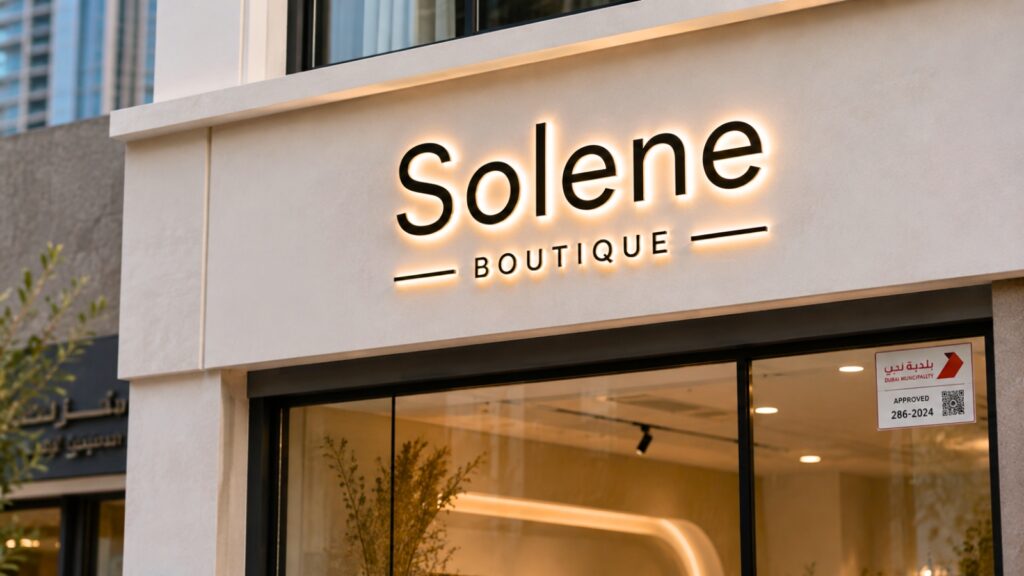
Illuminated storefront signage for a boutique
There isn’t one single authority handling every signage permit in Dubai. Dubai Municipality is the primary body for most applications, though the Roads and Transport Authority gets involved for anything near a road or public transport area, and free zone businesses go through Trakhees or their relevant free zone authority instead.

2. Match Your Sign to Your Trade License Name Exactly
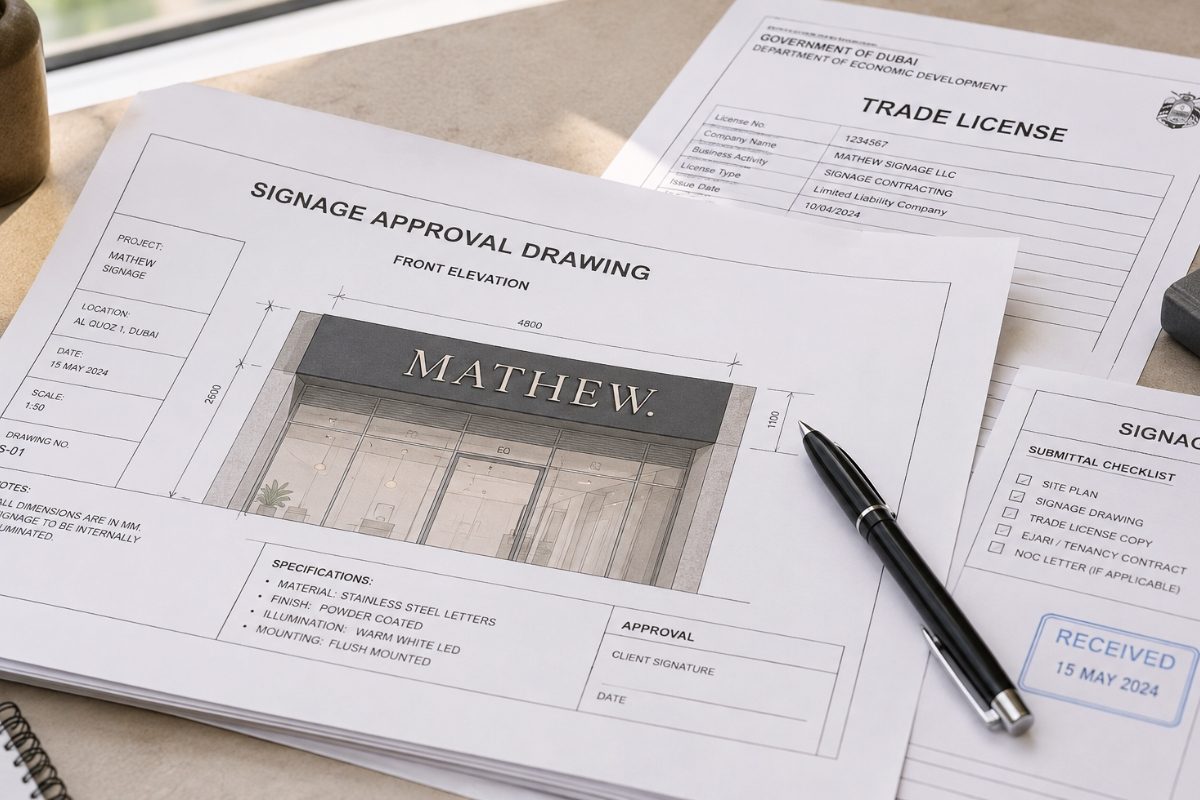
Your signboard name has to match what’s registered on your trade license, word for word. This is one of the more common rejection reasons, a rebrand or a shortened version of the business name on the sign that doesn’t match the license on file.
Signage approval documents and architectural drawing on a desk

3. Keep Sign Size Proportional to Your Building Frontage

Sign dimensions need to stay proportional to your shop or building frontage, and generally can’t exceed the width of your facade. A sign designed around branding preferences alone, without checking it against the actual building width, often gets sent back for resizing.

4. Follow Height and Structural Rules for Rooftop or Large Signs
Rooftop and parapet signs carry additional height restrictions, and any sign above 2.5 meters typically requires a structural review and risk assessment before it’s cleared. This matters most for larger illuminated signs or anything mounted above eye level.
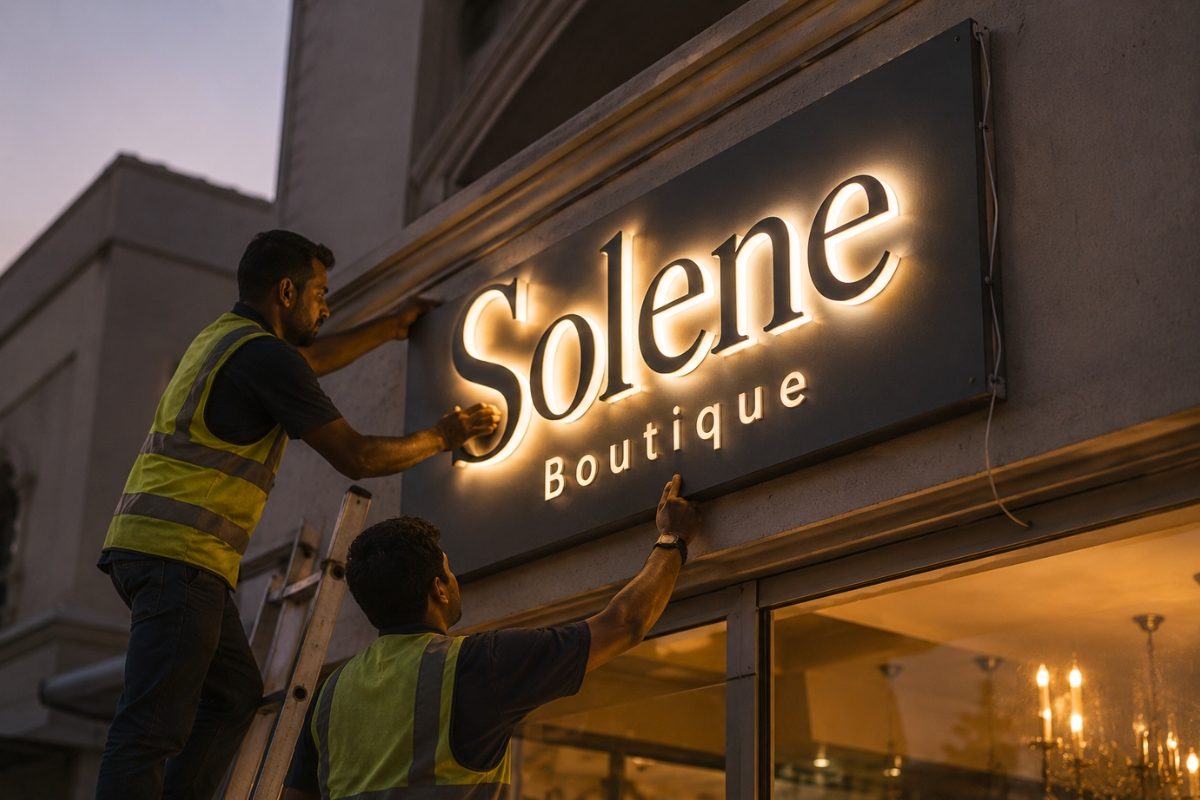
Technicians installing an illuminated shop sign at dusk

5. Stay Within Illumination and Glare Limits

Illuminated signs can’t cause glare toward neighbouring properties, pedestrians, or drivers, and LED or lightbox signs need to stay within set brightness limits. Confirm brightness specifications with your signage provider before production, not after installation.

6. Include Arabic Text on Your Signage

Dubai’s signage guidelines require Arabic text alongside any other language used, this isn’t optional for compliance. It’s easy to miss if a design is finalized in English first, better to build both languages in from the start.If your card design leans minimal, dark-colored stock with a light or metallic logo, or you want the finish to feel like a quiet detail rather than a focal point, debossing tends to suit that intent better. It’s also the more practical choice for finer, more detailed logos, since a recessed impression tends to hold fine lines more cleanly than a raised one does.

7. Renew Your Permit Annually and Submit an As-Built Drawing

Approved permits are valid for one year and need renewing before expiry. Once your sign is physically installed, an as-built drawing also needs to go back to Dubai Municipality for their records, a step that gets missed since it feels like paperwork after the fact.

A Few Things Worth Knowing Beyond the List

Applications for most commercial areas outside free zones go through the Smart Advertising Single Window portal, and approval generally takes 3 to 10 working days depending on the authority reviewing it. Even temporary signage, like an “Opening Soon” banner ahead of a launch, needs the same approval process, it’s a common assumption that short-term signage is exempt, and it isn’t.

What This Means for Your Brand

Signage approval isn’t just a compliance formality, it protects the investment you’ve already made in fabrication and installation by making sure the sign can actually stay up once it’s there. Building the approval timeline into your project plan from the start, rather than treating it as a final step, avoids the scenario where a finished sign sits in storage waiting on paperwork. Regulations and specific requirements can shift, so treat this as a starting framework and confirm current specifics with Dubai Municipality or your signage provider before finalizing a design.

Planning a new shop sign or building signage? Explore Veesham’s signage printing services for a design that’s built with approval requirements in mind from the start.

Frequently Asked Questions

Approval requirements mainly apply to outdoor and publicly visible signage, indoor signs are generally less regulated, though it’s worth confirming for larger or illuminated indoor installations.
Typically 3 to 10 working days depending on the authority reviewing the application, though incomplete documentation can extend this.
Yes, temporary signage goes through the same approval process as permanent signage.
Businesses risk fines and may be required to remove the signage, on top of losing the cost already spent on fabrication and installation.

Leave a Comment

Your email address will not be published. Required fields are marked *

Scroll to Top