
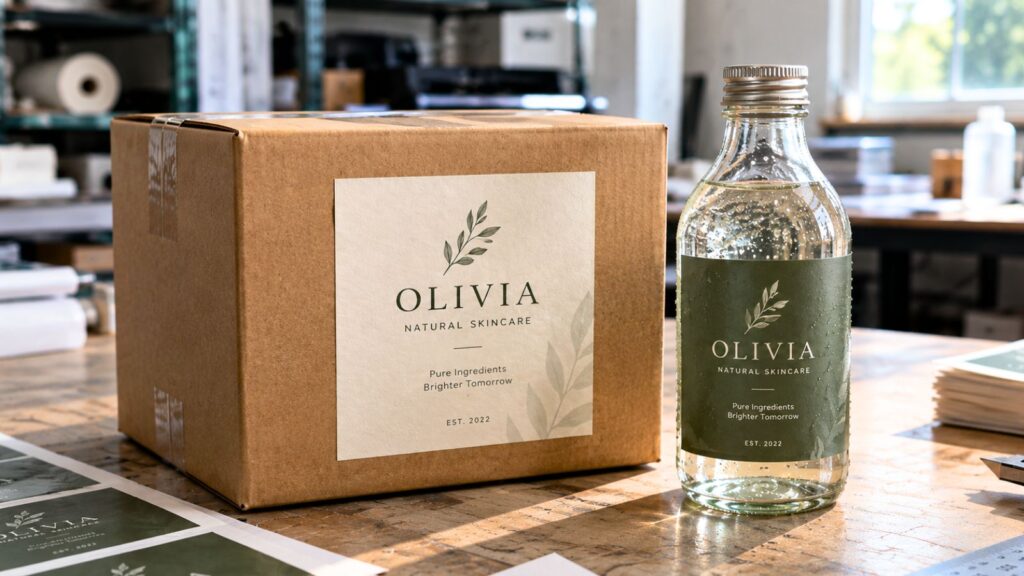
| Paper Labels | Vinyl Labels | |
|---|---|---|
| Water resistance | Poor, degrades when wet | Strong, naturally water-resistant |
| Tear resistance | Low, tears easily | High, flexible and durable |
| Best for | Dry goods, indoor, short-term use | Bottles, outdoor, refrigerated products |
| Print quality | Excellent color reproduction | Good, slightly less warm than uncoated paper |
| Cost | Lower | Higher, often 2-3x paper at low volumes |
Table of Contents
Toggle1. Paper Labels
Paper labels print exceptionally well, color reproduction is accurate, and uncoated stock in particular takes a warm, natural finish that vinyl can’t quite replicate. Cost is the other clear advantage, paper remains the more affordable option at almost any quantity, which makes it the sensible default when a label doesn’t need to survive anything beyond normal indoor handling.
The limitation is moisture. Paper absorbs water rather than repelling it, which means it wrinkles, discolors, or breaks down entirely once it gets wet. For dry goods, retail packaging kept indoors, or shipping labels that won’t face rain or condensation, this isn’t really a limitation at all, it’s simply outside what the label needs to handle.
2. Vinyl Labels
Vinyl is a flexible plastic film rather than a paper product, which is the whole reason it performs so differently. It naturally resists water, oil, and temperature swings, and holds up to repeated handling and bending without the surface degrading. This is why vinyl is the standard choice for bottles, jars, refrigerated or frozen products, and anything that will spend time outdoors.
The trade-off is cost, vinyl runs noticeably more than paper, sometimes two to three times as much at smaller quantities. For a label that needs to survive real conditions, water, oil, repeated handling, that extra cost usually pays for itself over the product’s shelf life, but it’s a genuine cost difference worth weighing against how the label will actually be used.
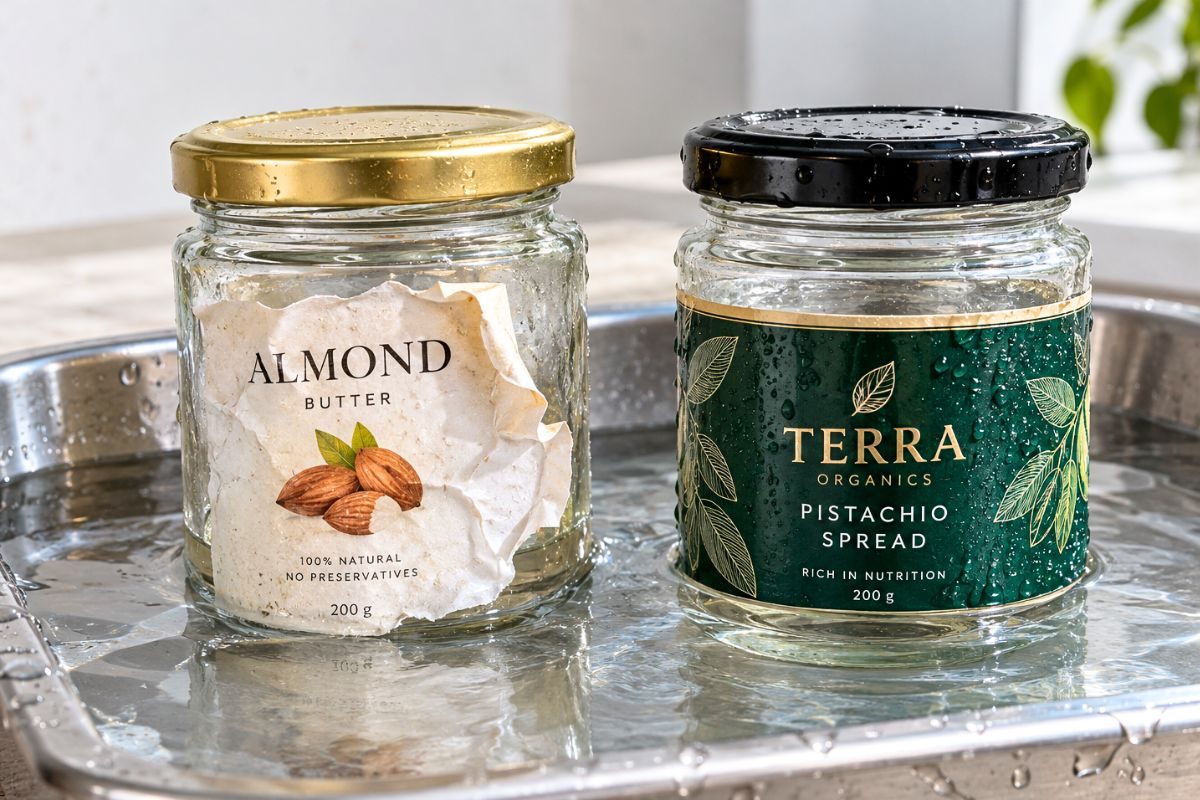
Comparing Them on What Actually Matters
Water and Moisture Resistance
Durability and Handling
Print Quality and Look
Cost Over the Product's Life
What This Means for Your Brand
The decision isn’t about which material looks more premium, it’s about what the label will physically touch. Dry goods, indoor retail, and short-life packaging are a clean match for paper, lower cost, excellent print quality, and no real moisture risk to plan around. Anything that meets water, oil, refrigeration, or the outdoors needs vinyl, since paper simply isn’t built to survive those conditions regardless of how it’s finished. If you’re deciding between a full die-cut label or a kiss-cut sheet alongside the material choice, our die-cutting vs kiss-cutting guide covers that decision separately. A UV coating or lamination layer can also extend a paper label’s durability somewhat, though it still won’t fully match vinyl’s resistance for genuinely wet or outdoor use.